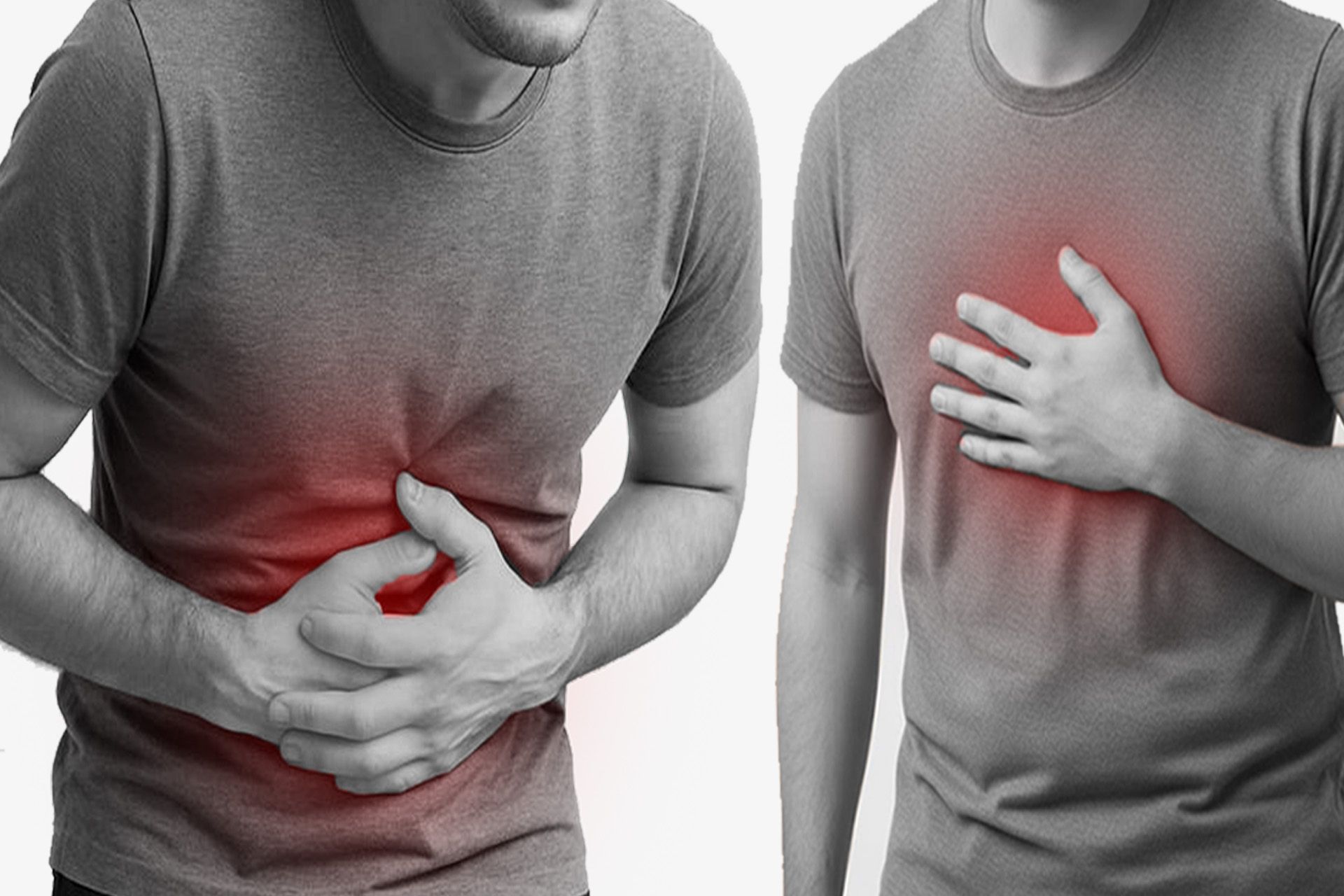



Indigestion and acidity (acid reflux) are amongst the most discussed digestive discomfort topics in relation to gut. They are often mistaken for each other, but as per medical science these are distinct conditions with different symptoms and triggers. Knowledge of these symptoms enables you to better interpret your condition accurately that in turn helps protect your Digestive Health .
What is Indigestion?
Indigestion, medically termed as dyspepsia, signifies discomfort or pain in upper abdomen. It mostly occurs after meals and might imply heaviness, bloated sensation, early fullness or even mild nausea. You might feel heavy, or it might also appear that your stomach isn’t functioning smoothly.
Here are some of Indigestion symptoms:
- Laggard Gastric Emptying: Sometimes meals aren’t digested effectively and stay in stomach, which might imply distension (expansion), pressure and bloated/full sensation in stomach. Studies show significant population with functional dyspepsia (a type of indigestion) have such symptoms. ⁽*⁾
- Weak stomach accommodation: After meals, upper stomach (fundus) should relax for a while. If it doesn’t, then mostly fullness sensation happens. ⁽^⁾
- Visceral hypersensitivity: This refers to increased sensitivity of nerves present in digestive system. The stomach and duodenum can become highly sensitive to stretching, even with regular meals. Mostly acute pain or discomfort is witnessed amongst those who have hypersensitivity. ⁽&⁾
Important: For many, Indigestion doesn’t imply excess acid. However, it is mostly about how Digestive Tract digests food and tackles pressure. ⁽^⁾
What is Acidity?
‘Acidity’ mostly refers to excess stomach acid or the irritation caused, especially when that acid traverses back to the oesophagus. Medically it is referred as acid reflux and when found frequent or damaging, it is termed as Gastroesophageal Reflux Disease (GERD). The burning sensation in chest/throat, sour taste or regurgitation are few symptoms to be highlighted.
Functionality explained:
- LES (Lower Oesophageal Sphincter) Dysfunction: The LES is the valve between the oesophagus and stomach. When it doesn’t close properly, stomach contents (such as acid) might traverse through oesophagus. ⁽&⁾
- Acid exposure & irritation: Oesophagus lining isn’t equipped to tackle acid as that of stomach lining. Repeated exposure might lead to irritation, often a burning sensation and sometimes damage. ⁽$⁾
- Frequent reflux → GERD: If acidity or acid reflux happen often or causes damage/inflammation, then these are mostly symptoms of Gastroesophageal Reflux Disease (GERD). *
How they are concurrent and how they differ?
Though distinct, indigestion and acidity often have concurrent symptoms, such as bloating, gas, belching or belly discomfort. But the triggers might differ:
| Aspect | Indigestion | Acidity / Reflux (GERD spectrum) |
| Fundamental Mechanism | Motility issues (Weak stomach relaxation) + sensitivity ⁽*⁾ | Acid reflux, LES weakness, acid irritating oesophagus. ⁽&⁾ |
| Typical Symptoms | Early fullness, discomfort after meals, bloating, belching, mild nausea ⁽%⁾ | Burning chest, regurgitation, throat irritation, acid aftertaste ⁽$⁾ |
| Does acid take centre stage? | Some indigestion cases have normal acid levels ⁽^⁾ | Erratic acid flow implies irritation & thus the symptoms ⁽&⁾ |
Mechanism and functionality of bloating and gas might differ. Indigestion hampers breakdown of food, thus implying gas & bloating while Acidity often means excess acid that irritates the stomach lining. Having said that, trapped gas often means discomfort through pressure and belching.
Why knowledge of difference in symptoms is important for Gut Health?
Knowledge of these symptoms helps with:
- Recognizing when symptoms are mostly referring to indigestion v/s acidity/acid reflux (or both).
- Skipping treatments that aren’t attuned to the symptoms such as taking acid blockers for indigestion that isn’t because of acid won’t help much.
- Taking healthcare advisory if symptoms persist for further treatments.
If symptoms are mild and occasional, paying attention to lifestyle changes, avoiding triggering food items and nutrition may help in overcome the symptoms. If symptoms are frequent, healthcare professional must be approached for advisory. There are products which are available, including Enzyme Tablets or digestive supplements which might help manage symptoms. Thus, it is imperative to have knowledge of these signs & symptoms for improved Gut Health .
Ref:
% Indigestion (Dyspepsia). https://www.niddk.nih.gov/health-information/digestive-diseases/indigestion-dyspepsia as accessed on 27.10.2025
*Functional Dyspepsia. https://www.mayoclinic.org/diseases-conditions/functional-dyspepsia/diagnosis-treatment/drc-20375715 as accessed on 27.10.2025
^ Francis P, Zavala SR. Functional Dyspepsia. [Updated 2024 Jun 8]. In: StatPearls [Internet]. Treasure Island (FL): StatPearls Publishing; 2025 Jan-. Available from: https://www.ncbi.nlm.nih.gov/books/NBK554563/
&What is GERD?. https://www.healthline.com/health/gerd/causes-of-gerd as accessed on 27.10.2025
$ Acid Reflux and GERD. https://my.clevelandclinic.org/health/diseases/17019-acid-reflux-gerd as accessed on 27.10.2025